Continuous Performance Testing: How to Integrate Performance Testing Into CI/CD
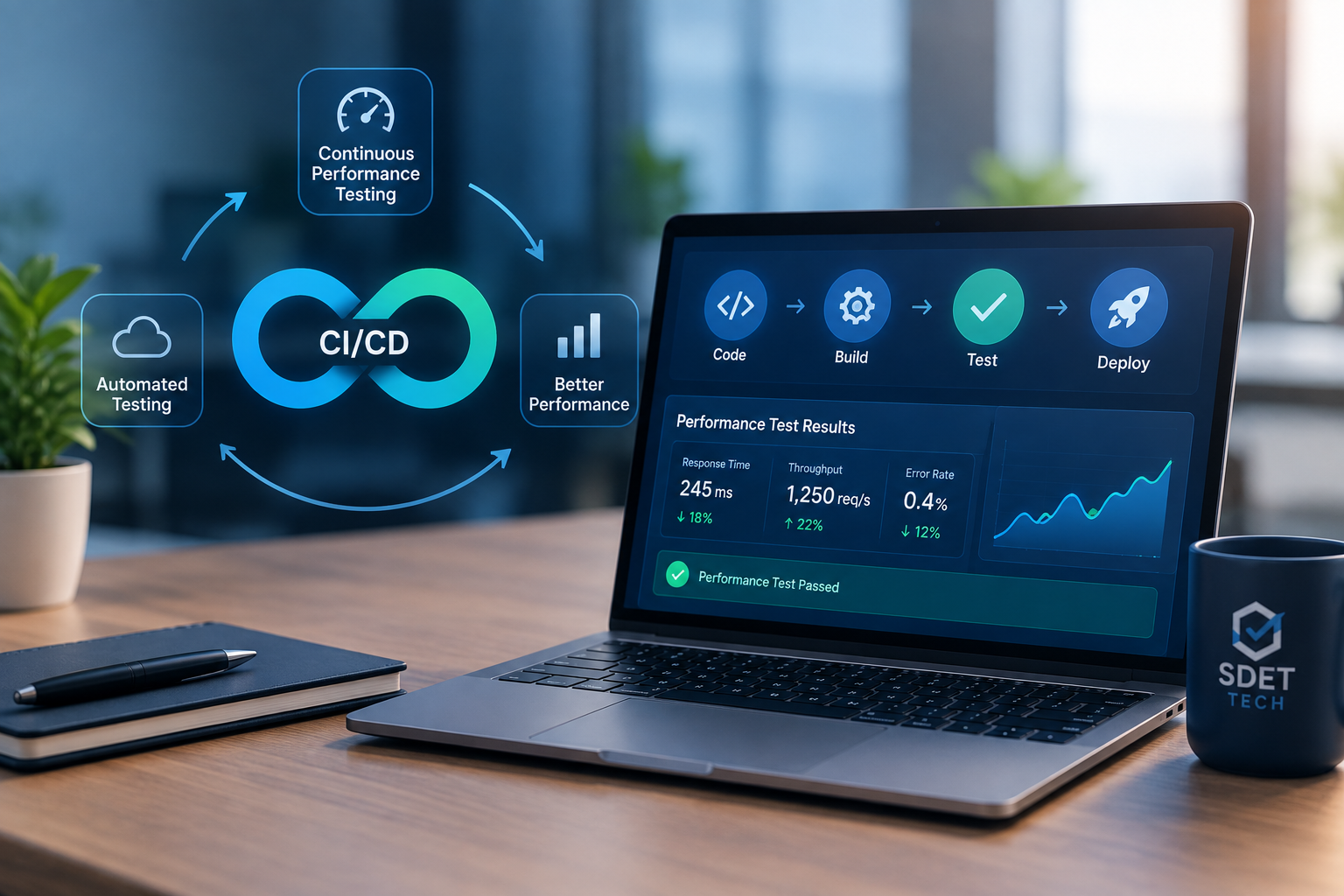
Performance issues discovered just before a product release can be expensive and difficult to fix. By integrating performance testing into CI/CD, development and QA teams can identify performance risks earlier and prevent unstable builds from reaching production.
This approach is known as continuous performance testing. Instead of treating performance testing as a one-time activity before release, teams make it part of the software delivery pipeline.
What Is Continuous Performance Testing?
Continuous performance testing is the practice of automatically executing performance tests throughout the development and delivery lifecycle. It combines performance testing automation with CI/CD pipelines so teams can continuously evaluate response time, throughput, resource usage, scalability, and system stability.
Unlike traditional performance testing that may happen after development is complete, continuous testing brings performance validation closer to development. This supports a shift-left performance testing testing approach where issues can be identified before they become expensive production problems.
Why Integrate Performance Testing Into CI/CD?
Modern applications can change multiple times a day. Running performance tests only before a major release may leave teams unaware of how individual code changes affect application performance.
CI/CD performance testing provides faster feedback after code changes. Automated tests can identify increases in response time, throughput degradation, resource bottlenecks, and other performance issues before deployment.
It also helps development and QA teams establish consistent performance benchmarks and make performance a measurable part of the release process.
How to Implement Performance Testing in CI/CD
The first step is to identify critical user journeys and APIs that should be monitored continuously. Teams can then create automated load testing or API performance tests around these workflows.
These tests can be integrated into tools such as Jenkins, GitHub Actions, GitLab CI/CD, or other DevOps pipelines. Every significant code change can trigger an appropriate level of performance testing.
Teams should also establish performance thresholds. For example, a build could fail if average response time exceeds an agreed limit or error rates increase beyond an acceptable percentage.
For larger applications, teams can combine automated performance testing with monitoring and observability data to understand how application, infrastructure, and database changes affect performance.
Continuous Performance Testing Best Practices
Successful DevOps performance testing does not mean running every large-scale load test after every code commit. Instead, testing should be risk-based.
Lightweight performance checks can run frequently during development while more intensive load, stress, scalability, and endurance tests can run at appropriate pipeline stages.
Performance results should also be tracked over time. Comparing current results with historical benchmarks makes it easier to detect gradual performance degradation before it affects users.
Build Performance Into Every Release
Continuous performance testing makes performance an ongoing quality requirement rather than a final release checkpoint. By combining automated performance testing with CI/CD, organizations can detect regressions earlier, improve release confidence, and build more resilient applications.
For organizations looking to implement CI/CD performance testing, SDET Tech provides performance testing and performance engineering solutions that integrate automation, continuous testing, and modern DevOps practices to help teams deliver faster without compromising application performance.